
How to Solve Double Wall Corrugated Pipe (DWC) Inner Layer Surface Problems?
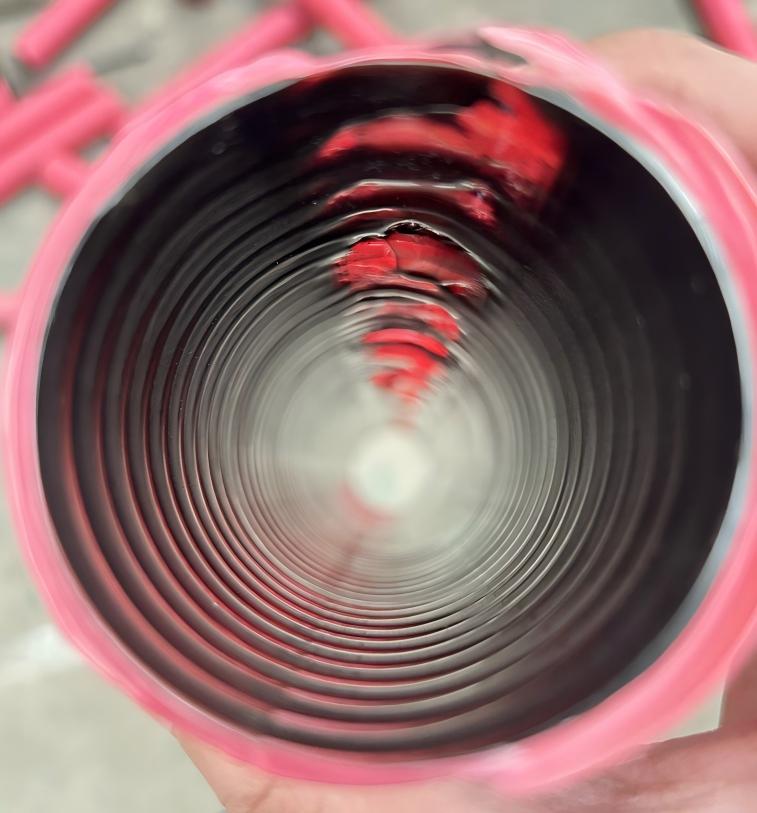
When producing Double Wall Corrugated (DWC) pipes, achieving a perfectly smooth and uniform inner layer is critical for fluid dynamics and overall structural integrity. However, operators often encounter surface defects during high-speed extrusion. Here is a practical troubleshooting guide to solve the two most common inner layer problems.
A. Rough or Uneven Inner Wall Surface
If the inner wall of your corrugated pipe is not smooth, or easily breaks when air is blown, you need to systematically check the following factors:
- Concentricity: First, ensure that the die head’s inner core is perfectly centered.
- Water Jacket (Sizing Sleeve) Diameter: Check if the cooling water jacket diameter is too large.
- Air Flow: Verify that the internal blowing air passage is clear and unobstructed.
- Material Thickness: Check if the inner layer material is simply too thin.
The “Too Thin” Phenomenon
If the inner wall is too thin, the adjustment screws at the inner die lip can easily cause specific linear sections of the melt to become extremely thin. When the forming air is applied, these weak lines will easily rupture or shatter.
The Solution: If you face this issue, you should moderately increase the inner layer extrusion temperature. This allows the raw material to achieve better melt fusion right at the die exit. Simultaneously, you must increase the overall inner wall thickness and reduce the internal forming air pressure as much as possible to prevent blowing through the thin spots.
B. Missing Material at the Top of the Pipe
Sometimes, you may notice that the top section of the inner layer is lacking material or collapsing. This is usually a cooling issue rather than an extrusion issue.
The Root Cause: This defect is generally caused by air bubbles trapped at the top of the sizing water jacket, or the water jacket is not fully filled with water. This results in the top material not being adequately cooled and shaped.
The Solution: A quick field fix is to swap the water inlet and outlet connections. This changes the flow dynamics and often flushes out the trapped air bubbles.
Pro-Tip: Use an Industrial Chiller
To permanently avoid this issue, we highly recommend that customers equip their extrusion lines with a dedicated industrial chiller. Chillers have powerful built-in water pumps that guarantee sufficient water pressure to keep the jacket fully flooded, while providing absolute temperature control for stable high‑speed forming on your double wall corrugated pipe machine.